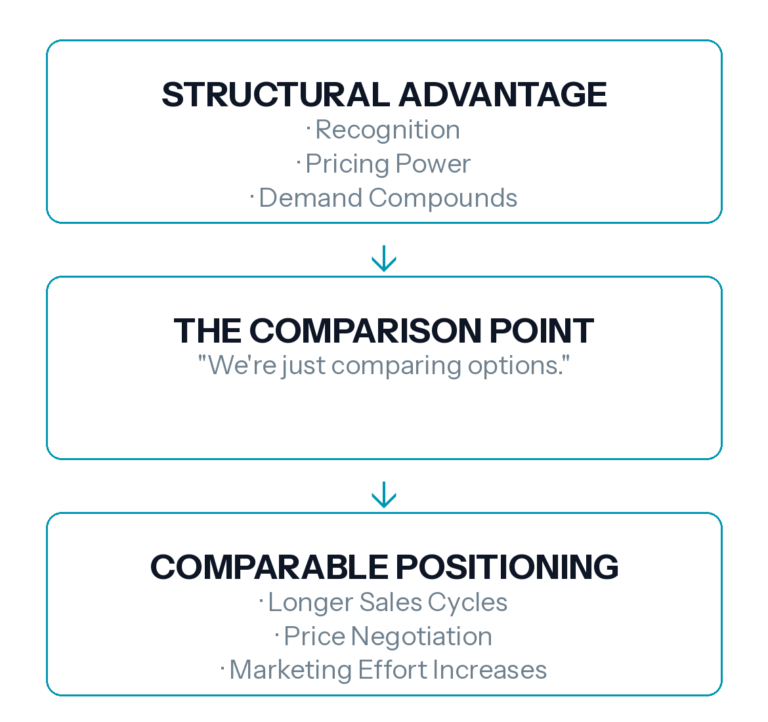
Most growth problems aren't marketing problems.
They're positioning problems.


Most planning applications that end in rejection, delay, or costly redesign share one uncomfortable truth: the failure was baked in long before the first drawing was submitted. The problem rarely lies with the design itself. It lies with the quality of strategic guidance received at the outset.
A planning advisory service should function as the intellectual backbone of any development proposal, stress-testing assumptions, identifying policy conflicts, and mapping the path of least resistance through complex regulatory frameworks. Yet too many applicants engage with advisory support too late, too superficially, or through providers who lack the technical depth to challenge conventional thinking.
This analysis examines why planning advisory consistently underdelivers, and what separates genuinely effective strategic counsel from the generic, checkbox-driven guidance that saturates the market. You will come away with a sharper understanding of the structural flaws embedded in conventional advisory models, the questions you should be asking before engaging any consultant, and the diagnostic indicators that distinguish advisory practices capable of adding real value from those simply processing instructions. The distinction matters more than most applicants realise, often by hundreds of thousands in project value.
There is a distinction that most executive teams never interrogate, and it costs them considerably.
Strategic planning is a process. Strategy is something else entirely. Strategy concerns the creation of sustainable competitive advantage through deliberate choices about where an organisation competes and why customers should choose it over available alternatives. Planning concerns timelines, budgets, milestones and accountability structures. As Roger Martin articulates clearly, strategy is the act of making an integrated set of choices that positions an organisation to win; planning is the act of laying out projects with deliverables, owners and deadlines. These are complements. Treating them as the same thing is not a semantic error. It is an organisational failure with measurable commercial consequences.
The problem with most planning advisory is that it sells the process while leaving the upstream question untouched. Structured workshops, facilitated sessions, aligned OKRs, milestone templates – these are the visible deliverables of a planning engagement. They create the appearance of strategic work. But if the organisation enters that process without clarity on where it competes, who it genuinely serves and why customers choose it over alternatives, the process produces output without producing strategy.
Martin reviewed over 80% of the strategic plans he is asked to assess and found they do not constitute strategy at all. They are, in his words, simply plans. Vision statements, four or five sensible domains, and a cluster of initiatives beneath each. The structure looks coherent. The strategic problem remains entirely unresolved.
This is the failure pattern: organisations invest weeks or months in a thorough planning process and emerge with broad themes rather than real choices. The foundational competitive question, the one that makes planning commercially meaningful, was never asked.
A planning advisory service, as conventionally delivered, addresses the symptom. The cause sits upstream. For any executive team committing significant time and resource to the process, that distinction matters enormously.
Planning asks how do we get there? Positioning asks where are we competing, and why should customers choose us over credible alternatives? These are not the same question. They are not even the same order of question. The second must be resolved before the first becomes commercially meaningful.
Most organisations reverse this sequence. They convene planning sessions, populate templates, set revenue targets and build execution roadmaps, all before they have made the foundational competitive choices those plans depend upon. The result is what one body of research describes bluntly as output that is “intellectually sound, operationally inert.” Rigorous in presentation. Weak in direction.
The reason organisations skip the positioning question is not ignorance. It is discomfort. Positioning forces real choices: which markets to exit, which customers to deprioritise, which competitive claims are genuinely defensible and which are aspirational fiction. Planning advisory, as a discipline, is largely structured to avoid this discomfort. Facilitating a leadership team toward consensus is commercially easier than challenging them toward clarity. But consensus without resolved competitive choices is not strategy. It is a document with good intentions and no backbone.
The downstream cost of this is significant. Research into why strategic plans fail suggests that 73% do so within the first 90 days, and that the primary failure mode is not poor execution capability but weak upstream thinking. Execution accounts for the overwhelming majority of effort in any planning cycle. That means the quality of the thinking that precedes execution carries an outsized influence on everything that follows. Unclear positioning does not produce unclear planning documents. It produces unclear organisations.
Positioning is not a marketing concept. This conflation is persistent and costly. Positioning is the architectural decision that determines which markets to enter, which customers to prioritise, which investments to make and which opportunities to decline. It sits above the plan. It shapes the plan. It makes the plan mean something.
The instinct to compensate for unresolved positioning with more process is understandable, but it is counterproductive. Bridging the gap between strategy and execution requires clarity at the top of the decision hierarchy, not additional layers of structured activity below it. More planning rigour applied to weak positioning does not correct the weakness. It accelerates movement in the wrong direction, faster, with greater confidence, and at considerably more cost.
Most strategic plans are not strategies. They are organised lists of sensible things to do.
The distinction matters more than most executive teams realise. A strategy is an integrated set of choices that positions an organisation to win in a specific competitive context. A plan is a structured set of initiatives with owners, timelines, and budget envelopes. The two are not interchangeable, and confusing them is precisely why so many planning cycles produce documents that describe everything an organisation intends to do without ever specifying where it intends to win.
The symptom is familiar: broad themes, multiple workstreams, cross-functional ownership. The root cause is almost always the same. The organisation entered the planning process without resolved positioning.
Consider a B2B software scale-up approaching its annual planning cycle with three credible growth vectors: enterprise upsell with existing customers, geographic expansion into two new markets, and a new product line targeting an adjacent segment. Each vector is internally validated. Market sizing is positive. Capability exists, at least in draft form. Revenue models are defensible.
The planning process does what it is designed to do. It organises each vector into a domain, assigns three or four initiatives per domain, and produces a fourteen-initiative plan complete with owners, timelines, and resource commitments. The document is thorough, structured, and credible-looking.
Execution collapses within two quarters. The enterprise upsell requires dedicated customer success resource. Geographic expansion demands localisation and new sales hires. The new product line competes for engineering capacity that the upsell feature roadmap also needs. Every team believes their vector is the priority, because the plan gave no signal to the contrary. Nothing was excluded. No hard choice was made upstream. The plan validated all three vectors rather than positioning the business to win with one of them.
This is not a resourcing problem or an execution problem. It is a positioning problem wearing the costume of a planning failure.
The planning process itself compounds the difficulty. Building a new strategic plan can take up to six months; refreshing an existing one typically takes four to five weeks. These are substantial investments of leadership time, involving facilitated workshops, stakeholder consultation, and document production.
Effort is visible. Strategic quality is not. A leadership team that has spent five months in a planning process has significant psychological and institutional stakes in the output, regardless of whether that output contains genuine competitive choices. The structured timeline lends the result an appearance of rigour that the content may not deserve. Broad themes feel authoritative when they arrive in a well-formatted strategy document.
This is false confidence, and it is expensive. The plan looks like strategic progress. It is often a record of everything the organisation was unwilling to decide.
Real strategic choice is an act of exclusion. Choosing where to compete requires choosing where not to compete. Defining which customers to serve requires specifying which customers to decline. Committing to one growth vector, under constrained resources, means deliberately deprioritising the other two.
That is uncomfortable. It is politically difficult inside organisations where multiple leaders have championed competing priorities. And it is rarely something the planning process is designed to force. Most planning advisory is structured around facilitation: running the process, building alignment, and producing the document. The adviser’s mandate is not to tell the leadership team that their three growth vectors are mutually exclusive under current resource constraints. That conversation requires a different kind of mandate entirely, and a methodology built around competitive positioning rather than process management.
Without that upstream clarity, the planning process defaults to inclusion. Themes are what you get when no one is equipped or empowered to push an organisation through the discomfort of genuine exclusion.
In a stable, low-cost environment, a thematic plan is merely inefficient. In a volatile one, it becomes a capital allocation crisis.
Elevated borrowing costs make parallel, multi-vector bets significantly more expensive to sustain. Tightening labour markets make the assumption of simultaneous capability build across three growth domains increasingly unrealistic. Board and investor scrutiny of capital efficiency has sharpened considerably through 2024 and into 2025, with thematic plans increasingly untenable when interrogated at the level of returns by segment or by market.
Organisations that defer the competitive clarity question do not simply plan poorly. They allocate capital, headcount, and leadership attention to strategies that cannot hold when operating assumptions are stress-tested. The plan may be well-constructed. The positioning it rests on may be entirely unresolved.
That gap is where competitive advantage is lost, long before execution ever begins.
Most CEOs engage a planning adviser the same way they engage an auditor: at a predetermined point in the calendar, with a clear deliverable in mind. The problem is that by the time the planning cycle begins, the most consequential strategic decisions have already been made, often by default. What follows is a set of diagnostic questions every senior decision-maker should ask before any advisory engagement begins.
Does the adviser distinguish between positioning clarity and planning process?
This is the first and most revealing question. An adviser who treats planning as the starting point is implicitly accepting your organisation’s existing strategic assumptions as given. They are not examining where you compete or why customers should choose you. They are helping you organise what you already believe. Positioning clarity, by contrast, must precede the planning process. It is the foundation on which a meaningful plan is built. If an adviser cannot articulate this distinction clearly in the first conversation, they are operating at the wrong level of the strategic hierarchy.
Are they working upstream or downstream?
Upstream advisory concerns competitive positioning, where-to-play decisions, strategic architecture and business model logic. Downstream advisory concerns timelines, milestones, OKR design and departmental alignment. Both have value. The mistake is paying upstream rates for downstream work. Ask the adviser directly: at what point in your organisation’s strategic hierarchy does their engagement begin? If the answer centres on process design, stakeholder alignment or planning facilitation, you are looking at downstream expertise, regardless of how the proposal is framed.
What does their framework actually test?
There is a critical difference between a framework that stress-tests competitive assumptions and one that organises the assumptions an organisation already holds. The second type produces well-structured plans built on potentially flawed foundations. Ask the adviser to show you a previous engagement where their process produced a finding that contradicted what the leadership team believed going in. If they cannot, the framework is a mirror, not a lens.
Does the engagement produce real choices?
A planning output that every senior stakeholder can endorse without discomfort has almost certainly failed its primary purpose. Strategy that excludes nothing is not strategy. The adviser’s value is partly in making exclusion commercially safe: decisions about which markets to exit, which capabilities not to build, which customer segments to deprioritise. If the deliverable is a document designed for consensus, it is not a strategic plan. It is a political document.
The most valuable advisory work happens before the planning process begins, not inside it. Organisations that engage advisers solely at the planning stage are investing in execution choreography. The questions that shape what a planning process can ever produce are answered upstream, in the phase most organisations skip entirely.
The move away from rigid annual planning cycles is real, well-founded and accelerating. Scenario planning, emergent strategy, real-time adjustment and parallel time horizons are not passing trends; they reflect a genuine and necessary response to operating conditions that no longer reward the assumption of predictability. According to research cited by BCG, adaptive firms outperform peers by 3x in revenue growth and 2x in ROI during periods of uncertainty. That is a compelling case for building organisational flexibility into how strategy is executed.
But here is where the reasoning frequently goes wrong.
The conclusion drawn by many executive teams is that adaptive planning reduces the need for upstream clarity. If the plan will change anyway, why invest heavily in resolving the foundational questions? This logic is seductive and almost entirely mistaken. Adaptive strategy is not the absence of fixed beliefs; it is the disciplined testing of prior beliefs against changing conditions. Without a resolved view of where the organisation competes and why customers choose it over credible alternatives, adaptation has no reference point. It becomes drift with a more sophisticated vocabulary.
The organisations that benefit most from adaptive methods are those that have already done the harder upstream work. They know precisely what to hold constant and what to flex. Their positioning, their competitive logic, their definition of who they serve and why they win, these are settled. What changes are the tactics, the timing, the allocation of resources in response to shifting conditions. That is not reinvention. That is responsiveness built on a stable foundation.
Speed without that foundation is not agility. It accelerates movement in an unresolved direction.
This is the practical distinction between responsive strategy and reactive strategy. Responsive organisations adjust around a stable position. Reactive organisations repeatedly reinvent the plan because the position was never clear in the first place. The planning process looks similar from the outside. The commercial outcomes are not.
There is a body of thinking that sits upstream of any planning process. It is not a methodology. It is not a framework you apply once and file away. It is the structural interrogation of competitive position that determines whether a plan has solid foundations or simply coherent presentation.
Strategic Positioning Architecture™ is how that upstream work gets done rigorously. Not as a service offering, but as a way of thinking about the questions that must be resolved before any planning cycle begins: where does the organisation compete, who does it serve, why should customers choose it over credible alternatives, and what must be true structurally for that position to hold and strengthen over time.
These are not planning questions. They are positioning questions, and the distinction is consequential.
A planning process is designed to organise assumptions, not challenge them. Stakeholders contribute priorities, departments add objectives, and the output reflects the organisation’s current understanding of itself, packaged into a coherent document. What it rarely surfaces is whether the foundational assumptions about competitive position are accurate, tested or defensible. Most strategic plans fail before they start precisely because leadership teams skip this structural conversation and move directly to goals and initiatives, assuming alignment that does not exist.
This is the failure pattern worth confronting directly. The plan may be internally consistent. The initiatives may be sensible. But if the competitive position underpinning it has never been genuinely interrogated, the organisation is building on ground it has not tested. Coherent planning on an unstable position is not strategy; it is organised hope.
For founder-led businesses, scale-ups and private equity-backed organisations, this matters with particular force. Competitive position assumptions in these contexts are often inherited: from early market entry decisions, from deal thesis documents, from the founder’s original instinct about where value lies. They are rarely revisited with the rigour the current competitive environment demands.
Resolving the competitive position question is frequently the highest-leverage strategic intervention available to these businesses, not because it produces a document, but because it changes how decisions get made at every subsequent level. Pricing decisions, market entry choices, talent priorities, capital allocation: all of these depend on a clear, tested answer to where the organisation competes and why it wins. Without that clarity, even well-run planning processes produce sophisticated-looking activity in the absence of genuine strategic direction.
The failure you are most likely to repeat in your next planning cycle is not a process failure. It is a positioning failure that your planning process will inherit, organise and embed into your operating assumptions for the next twelve to thirty-six months.
Before that cycle begins, apply a simple diagnostic. Ask whether your last planning cycle resolved the competitive clarity question or quietly deferred it. Ask whether the plan that emerged would hold under genuine pressure from a well-resourced competitor who had studied your market as carefully as you have.
Here is a sharper provocation. If you can describe your strategic plan in terms that your three nearest competitors could also claim, the plan has not resolved your position. It has organised your assumptions and given them a professional format.
A planning advisory service, properly understood, is not about the plan. It is about the competitive clarity that gives the plan its commercial logic and its internal discipline.
The question is never whether to plan. The question is whether you have done the thinking that makes planning worth doing.